
Holiday gifts carry more weight than any other company gift of the year. They arrive when people are reflecting on the past 12 months, and the gift becomes a small, physical summary of how the company feels about them.
The appetite is there. Snappy's 2026 Holiday Gifting Survey of 1,500 U.S. employees found that 84% of employees want a holiday gift from their employer, while only 57% currently receive one. The same survey found 78% said a thoughtful year end gift would leave them more motivated heading into the new year.
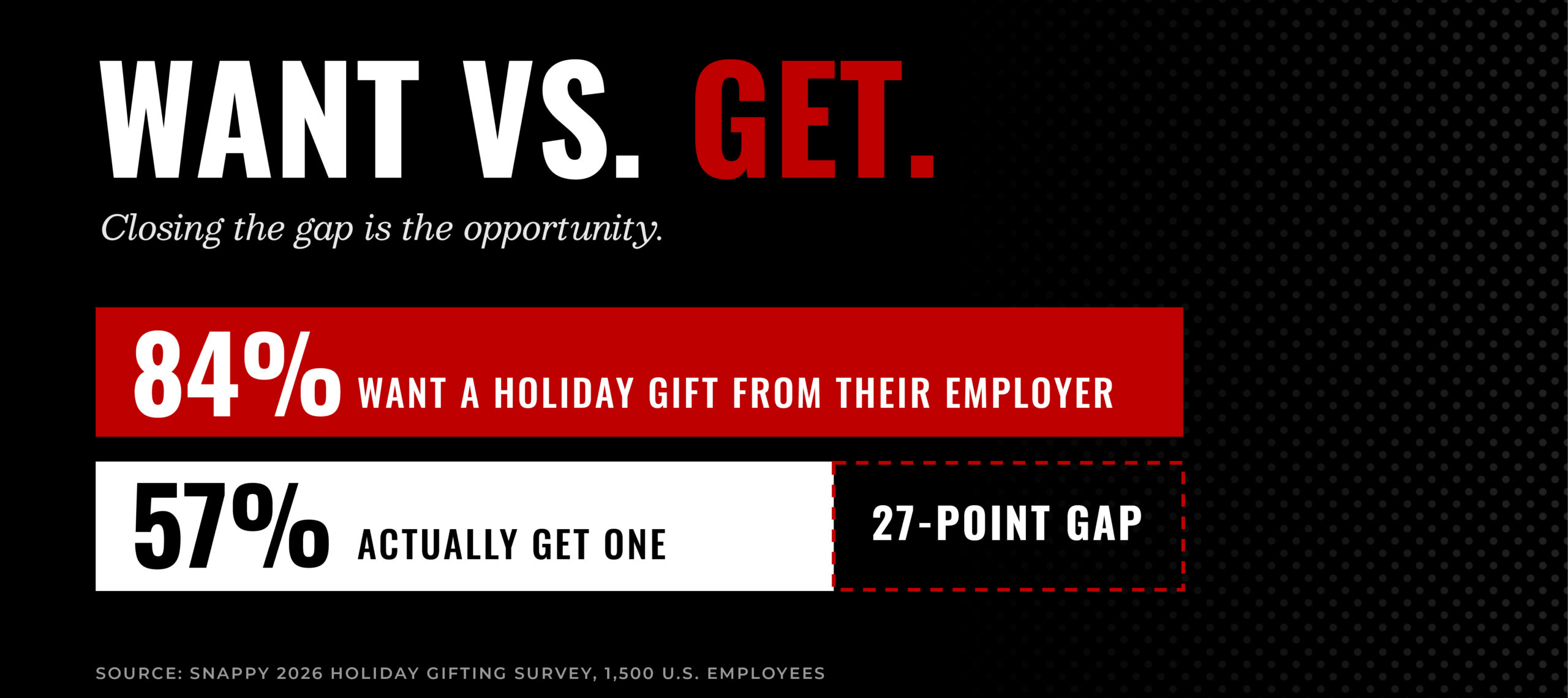
That gap between want and receive is the opportunity. This guide covers which apparel gifts land with employees and clients, what to spend, how to brand them, and when to order so the gifts arrive before the holidays instead of after.
What Makes a Holiday Gift Worth Keeping?
A holiday gift gets kept when it is useful, fits the recipient, and looks like something they would choose themselves. Usefulness carries the most weight: research from the Promotional Products Association International found that 83% of recipients named usefulness as a reason they kept a corporate gift.
Apparel clears that bar more reliably than almost any other category, because clothing has a built in daily use. A quality quarter zip or hoodie replaces something already in the closet. A branded desk gadget competes for space with objects the recipient never asked for.
The failures follow a pattern. Gifts get regifted or discarded when they are generic, sized wrong, or branded so heavily that wearing them feels like advertising. We covered the broader logic behind gifts that stay in rotation in our breakdown of corporate gifting that does not end up in a drawer.
What Do Employees Want for the Holidays in 2026?
Employees want gifts that feel personal and useful, and a growing share are tired of identical gifts handed to everyone. In Snappy's 2026 survey, 43% of employees said a good gift feels personal to them, and 44% said giving every employee the same gift feels outdated.
Choice is the clearest way to meet that expectation at scale. Separate research has found at least 68% of employees would rather have input on their gift than have it chosen for them. A curated set of 2 or 3 apparel options, each in the recipient's correct size, delivers that input without turning the gift into a gift card.
Tangible gifts still outperform digital ones. Incentive Research Foundation data shows 68% of employees prefer a tangible reward over a digital gift card, which favors apparel over cash equivalents when the goal is recognition rather than compensation.
Which Apparel Gifts Work Best for Employees?
The strongest employee apparel gifts are comfortable, casual, and built for daily wear outside the office. Hoodies, quarter zips, beanies, and caps lead the category because they fit into weekends, commutes, and home life.
- Hoodies and crewnecks. The most universally worn garment in any gift program. A heavyweight blank in the 8 to 10 ounce range feels substantial in hand and holds up through a full winter of washing.
- Quarter zips. The most versatile option for mixed office and field teams, since the same piece works in a meeting and on a Saturday.
- Beanies and caps. Low unit cost, one size, and highly visible. A cuffed beanie with a clean embroidered logo covers the season, and a structured cap covers the rest of the year. Our guide to custom hats in 2026 covers the styles and decoration methods driving hat orders this year.
A practical structure for employee gifting pairs 1 anchor piece with 1 accessory, such as a hoodie and a beanie. The combination feels like a gift set rather than a single item, while keeping the per person cost manageable.
Which Apparel Gifts Work Best for Clients?
Client gifts should prioritize perceived value over volume. A single premium piece from a recognizable brand communicates more than a box of branded accessories, because the recipient recognizes the garment's worth before reading the logo.
Outerwear leads this category. Vests and jackets from brands like Patagonia, The North Face, and Carhartt carry retail recognition and generate the most impressions of any promotional item, since outerwear stays in use for years. Quarter zips from Nike, TravisMathew, or Cutter & Buck fit client relationships in finance, real estate, and professional services.
Branding should stay restrained on client gifts. A small embroidered mark on the chest or sleeve lets the garment stand on its own merits. A client wearing your logo to dinner is the outcome worth designing for, and an oversized logo works against it.
How Much Should You Spend on a Holiday Apparel Gift?
Employee holiday gifts typically land between $50 and $100 per recipient. A Tremendous survey of 1,500 U.S. employees found 66% considered $50 to $100 an appropriate value for an employer holiday gift, and Forbes reporting on the corporate gifting market found the largest group of buyers spending $75 to $100 per gift.
Apparel maps cleanly onto that range. A premium hoodie plus a beanie, or a branded quarter zip on its own, typically falls between $50 and $90 per person depending on the blank, decoration, and quantity. Client gifts in outerwear often run $100 to $175 for premium brands.
Spending more per gift tends to lift acceptance. Postal's corporate gifting data shows gifts under $25 carry roughly an 81% acceptance rate, while gifts over $75 reach about 90%. When budgets are tight, a smaller list of better gifts usually outperforms a longer list of cheap ones.
When Should You Order Holiday Apparel Gifts?
Order holiday apparel 6 to 8 weeks before the delivery date, which means placing orders in October or early November for December gifting. That window covers size collection, artwork approval, production, and packaging without rush fees.
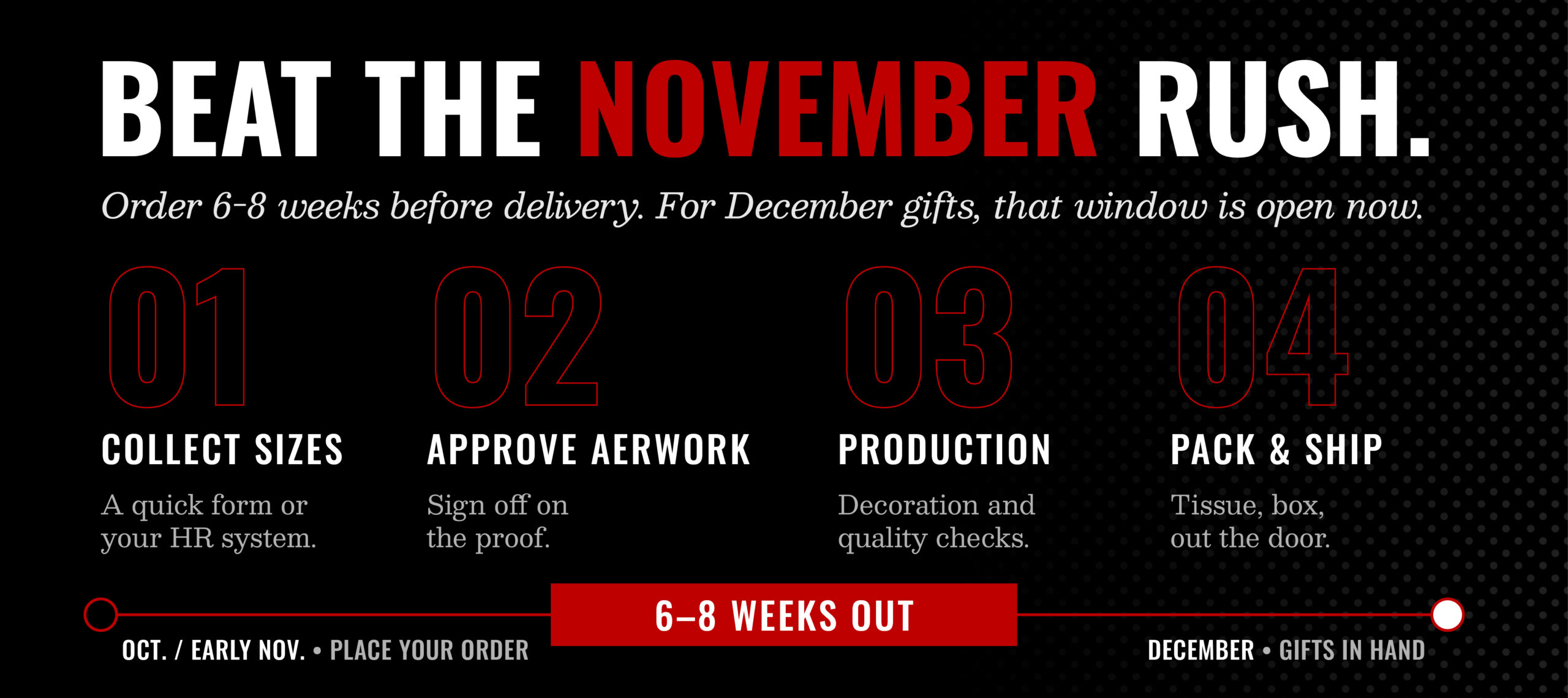
November is the most compressed month of the year for decorated apparel. Every company with a holiday program competes for the same production windows, premium blanks sell through in popular sizes, and the shops serving larger metro areas fill their calendars first. Companies ordering custom apparel in Columbus and other metro markets feel that crunch earliest.
Size collection is the step that slips most often. Gathering sizes before the order is placed, through a quick form or an HR system, prevents the most common holiday gift failure: a quality garment that does not fit the person who received it.
Should Recipients Get to Choose Their Own Gift?
Offering a small curated choice produces better outcomes than assigning one gift to everyone. Recipients wear what they chose more often than what they were handed, and choice addresses the 44% of employees who say identical gifts feel outdated.
The structure matters. A choice between 2 or 3 pre approved pieces in a few colorways keeps production efficient and branding consistent, while giving each recipient real input. An open ended catalog creates decision fatigue and scatters the order across too many low quantity runs.
Personal touches compound the effect. A handwritten note, a recipient's name on the packing slip, or a tonal embroidered initial on the cuff all signal that someone thought about the individual.
How Should Holiday Apparel Gifts Be Branded?
Holiday apparel gifts should carry small, restrained branding that keeps the garment wearable in public. A left chest embroidered logo, a sleeve hit, or a tonal mark close to the garment color all keep the garment wearable outside of work.
Tone on tone embroidery suits holiday gifting in particular. Stitching a logo in a shade close to the garment color keeps the brand visible up close while letting the piece function as everyday clothing from a distance.
Packaging finishes the gift. A garment folded in tissue inside a branded box lands differently than the same garment shipped in a poly mailer, and for client gifts the unboxing is part of the impression.
What Separates a Kept Holiday Gift From a Regifted One?
Kept gifts are useful, sized correctly, chosen with some input from the recipient, and branded lightly enough to wear anywhere. Regifted gifts miss on one or more of those points, usually sizing or usefulness.
The data points in a consistent direction. Employees want holiday gifts, prefer tangible ones, value personal relevance, and keep the items that fit into daily life. Apparel meets all four conditions when the blank, the fit, and the branding are chosen with the recipient in mind.
Order early, collect real sizes, offer a small choice, and keep the logo proportional. Those 4 decisions account for most of the difference between a gift that gets worn through the winter and one that gets passed along.